Open Scholar – Know How
Open Scholar – Know How
Performing ‘blindness’ in the academy.
Over the last 18 months Extant has been collaborating with Grace Joseph, who until recently was a Postdoctoral Research Associate at the University of Sheffield. the project, Open Scholar, was funded by Wellcome Anti-Ableist Research Culture (WAARC).
Grace had previously worked with Extant on Open Scripts, an Extant action research project exploring access to scripts for visually impaired artists.
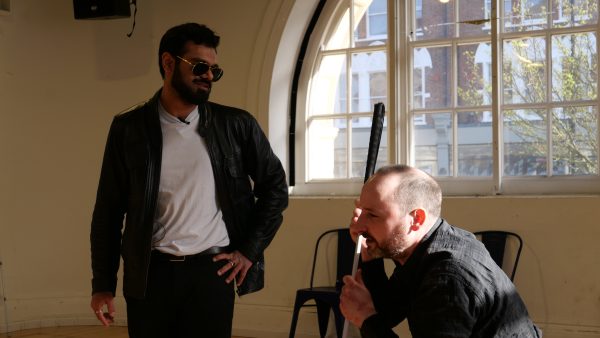
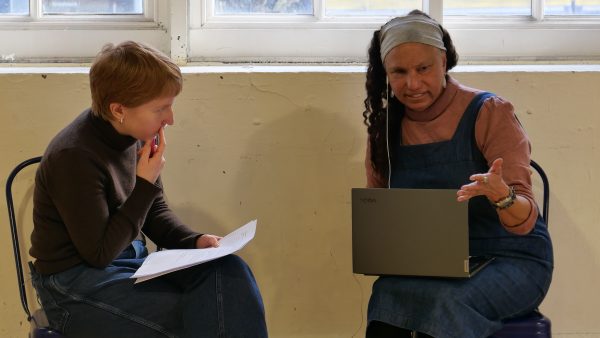
Open Scholar addressed access and blindness in relation to research, particularly within high education institutions. This includes access to research materials and barriers in university settings, and extends to the collaborative and individualised access practices of visually impaired researchers. The overarching project aim was to identify and to resolve a need within academia for presenting research in different kinds of ways, and for this thinking to be led by disabled approaches to, and experiences of, knowledge. How might performance capture and accessibly convey complex academic research? And, further, how might performance represent and, crucially, reimagine institutional access?
We began the project in November 2025 by convening a roundtable discussion between twelve blind and visually impaired academics and artists about how their work is done – the barriers and the workarounds – in academia and beyond. We sought to centre the ad hoc and idiosyncratic methods researchers have developed – often in the face of ableist institutions – to cultivate access in their professional environments.
Through the roundtable, we (re)discovered the desirability of both independence and interdependence in the context of disability and access – these ways of being, researching, and practicing, are not so neatly opposed. We drew together the themes from our roundtable: the DIY and collaborative access practices, and the total access failures. We began to build a theoretical framework for these themes, and for our performers, accumulating texts and theorists that speak (back) to issues of access.
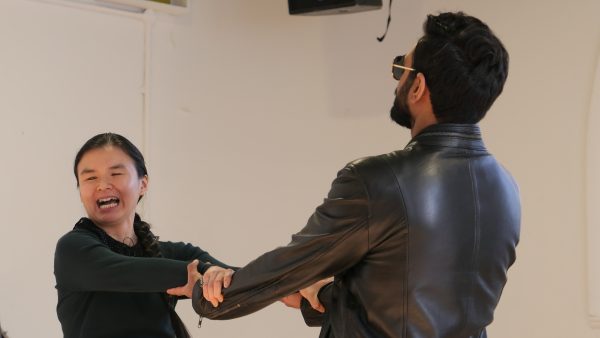
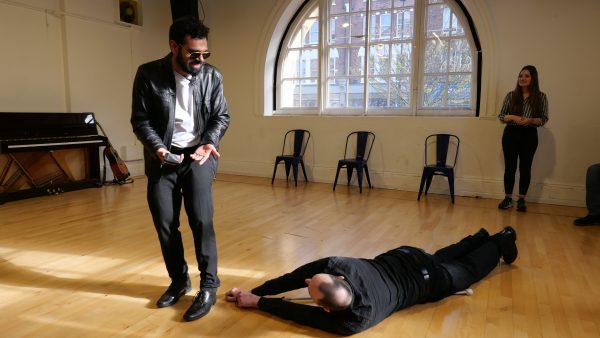
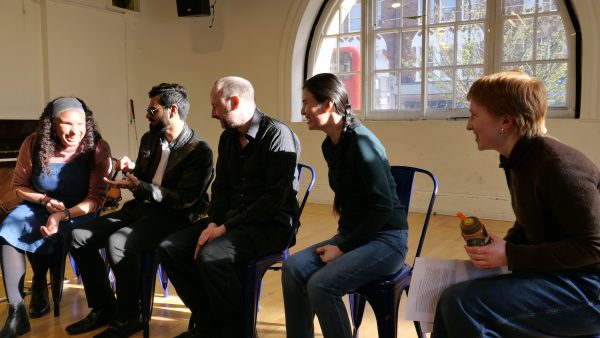
In March 2026 we presented a half-hour performance called, Know How, at Battersea Arts Centre, to an invited audience of academics and artists, all of whom shared an interest in access and the arts.
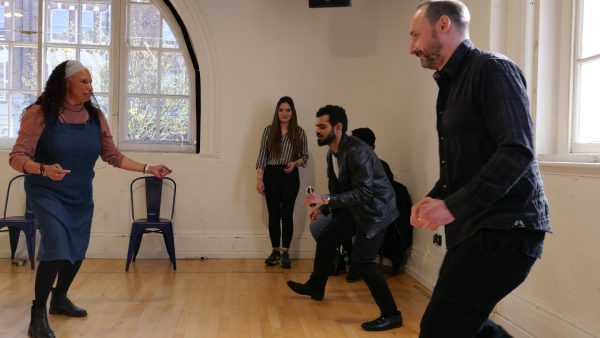
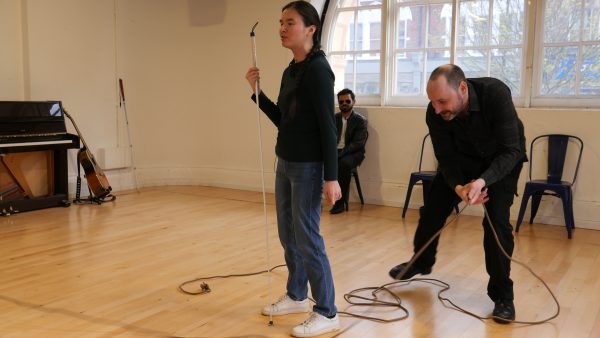
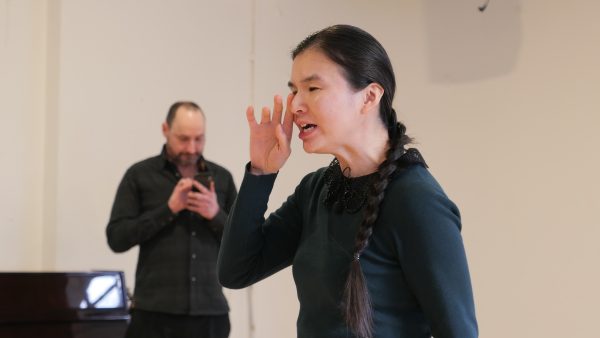
We had spent two full days beforehand, and the morning of the performance in rehearsals with three visually impaired performers: Chris Campion, Shashank Sharma, and Jasmine Thien.
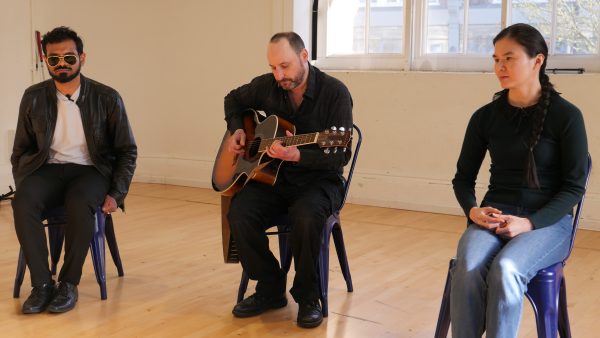
During this rehearsal process we all felt the possibility of – and interpersonally enacted – a different kind of access, and openly explored (with varying levels of satisfaction) possibilities of more direct access through performance.
For more analysis of our exploration including references and influences, read our paper, presented at TAPRA 2026 here: Paper for TaPRA 2026_Performing ‘blindness’ in the academy
For highlights of the presentation and audience feedback you can experience this 30 minute film here.
For a 1 hour podcast of the rehearsal process and audience Q/A, listen here.
Credits
Roundtable contributors:
Harshadha Balasubramanian
Nic Bonne
Simon Hayhoe
David Johnson
Joseph Rizzo Naudi
Armineh Soorenian
Performers:
Chris Campion
Shashank Sharma
Jasmine Thien
Creative/production:
Director /researcher: Maria Oshodi
Researcher/consultant: Grace Joseph
Research assistant: Aisling Keavey
Stage Manager: Leigh Arthur
Access support: Mary Betteridge, Phoebe Moore, Chikodi Nwaiwu
Photography by Ian Abbott.
With thanks to WAARC, The University of Sheffield and the Wellcome Trust.
