Attending Online Training as a Visually Impaired Trainee Creative Producer
By Ava Brewster, Trainee Creative Producer
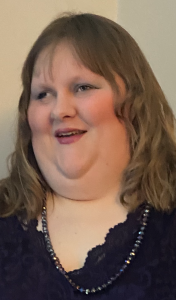
Ava Brewster
As a Trainee Creative Producer, I’m keen to learn as much as I can, build my confidence, and develop skills I don’t yet have much experience in. When I was offered the chance to attend two online training sessions from the Media Trust, I jumped at it. I was curious, interested, and hopeful that they’d give me new insight into areas I’m still learning.
I took part in two sessions. One was Digital Marketing for Charities, and the other was on Creating Online Resources for Charities. Both were delivered online via Zoom. Going in, I wasn’t entirely sure what to expect, and I was a little nervous beforehand.
Both sessions had clear objectives of what would happen and what would be covered, and both guest speakers were welcoming, knowledgeable, and clearly wanted to share their experience. That part worked well.
In the digital marketing session, it quickly became clear that there were a lot of people in the room – at least fifty. Almost immediately, the chat function became very active. Messages were constantly pinging in as people shared answers, ideas, and comments.
When the speaker asked questions, responses were requested via the chat. Everyone typed at once, and the conversation moved on almost immediately. While I could understand what was happening through what was being said out loud, the chat was moving very quickly. I didn’t have time to type responses myself, and the constant chat activity made it difficult to access my own screen. I also didn’t have time to read what other people were saying before the session moved on to the next point.
Polls were also used during the session to gather specific answers. These were only available briefly, the speaker continued talking, and the chat was still very active at the same time. On my screen, there wasn’t a clear or usable way for me to take part, so I couldn’t engage with them.
Because of this, I often felt like I was a tiny bit behind, constantly rushing to catch up. I was working much harder just to follow along, while for other, non-visually-impaired people the same session would have involved far less effort and been far less overwhelming. Instead of being able to focus fully on the content, I was splitting my attention between listening, trying to navigate the interface, and trying not to miss what was happening next.
I also felt quite alone in the experience. Other participants could read people’s responses, questions, and shared tips. They could see whether others were also new and nervous, or whether experienced people were offering useful insights. That layer of shared interaction and peer learning wasn’t available to me.
Over time, I stopped actively trying to interact and focused instead on listening. I took my own notes and tried to take in what I could through what was being said out loud. As the speaker did most of the talking, this was quite doable, but it also meant accepting that I was missing parts of the session that were happening visually and through the chat.
It had been communicated in advance that I was visually impaired and would be attending the sessions. However, there were no adaptations made to how the sessions were run. The format didn’t change, and there were no alternative ways offered for me to participate more fully.
There were some things that worked well. The speakers were clear, experienced, and genuinely keen to share their knowledge. They made an effort to tailor their advice to different types of organisations, such as large charities and smaller community-led groups.
The second session, about creating online resources, was a smaller group of around twenty-five to thirty people. The pace was slower, and the atmosphere felt more relaxed, which made it easier to follow. That said, some of the same accessibility issues were still present, just on a smaller scale.
I took a lot away from this session. We talked about focusing on what the reader actually needs to know, rather than what you want to tell them. There was emphasis on avoiding jargon so that resources are accessible to a wide range of people, and on adapting both the type and amount of information you share depending on who it’s for. The speaker was clear about what would be covered, and because everyone else was muted, the audible experience was better.
However, leaving these sessions, I didn’t just feel informed — I also felt tired and slightly stressed from having to work so hard to keep up. That effort isn’t always visible, but it’s very real, and it affects how much energy you have left to engage and enjoy learning.
From my experience as a visually impaired participant, there are some changes that could have made these sessions more inclusive, but none of these were present in how the training was delivered:
- Sending session materials and key points in advance, so visually impaired participants can review them using their own access tools before the session starts.
- Sharing discussion questions ahead of time, so people aren’t trying to process, type, and respond at speed while also listening.
- Reading out selected chat responses, so everyone is included in group discussion and peer learning.
- Using breakout rooms, small group discussions, or the hand-raise function on Zoom, so participation isn’t limited to fast-moving chat only.
- Acknowledging access needs in how the session is run, not just in who is invited to attend.
- Accessibility is not just about having clear speakers and good intentions. It’s about whether people can participate on an equal footing, without having to work harder just to stay in the room.
These sessions showed me that online training can be informative and still not be fully accessible at the same time. If we want learning spaces to be genuinely inclusive, access has to be part of the design and delivery, not something left to individual participants to manage on their own.
Extant already have tools, training and methods that session organisers can access and build into their training without making it harder to run, but that only happens if accessibility is talked about, shared, and actively encouraged so that better practice becomes the norm rather than the exception.
February 2026